
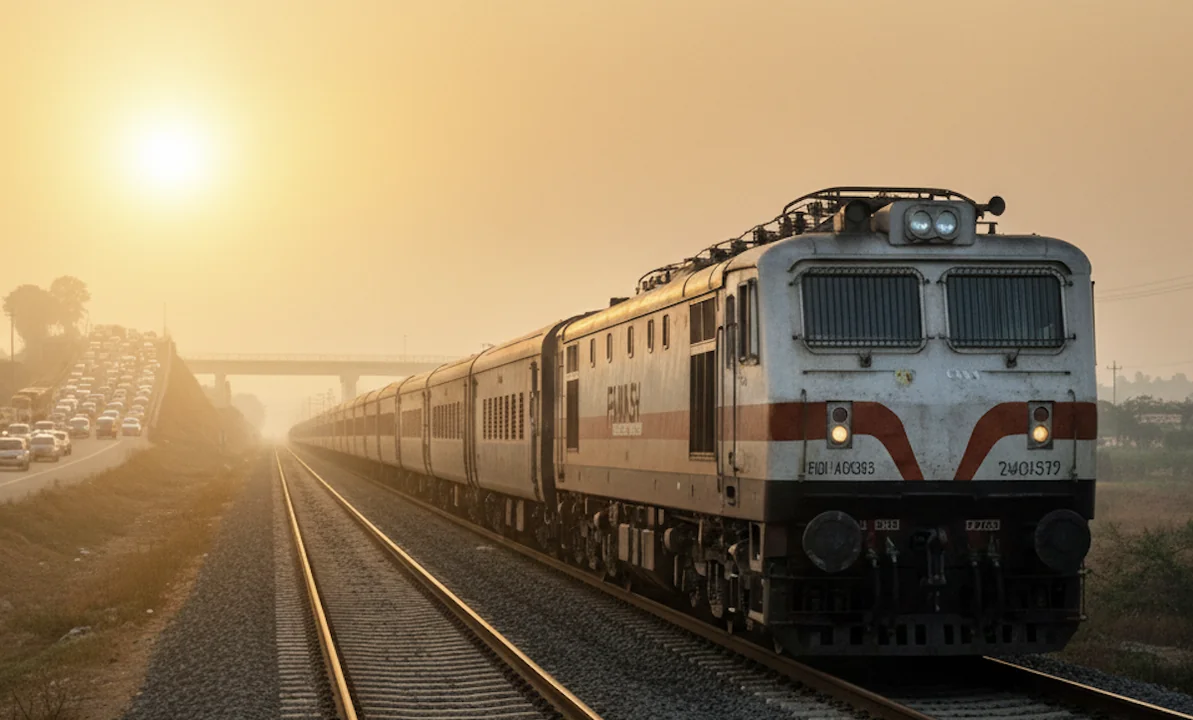
Engineering Excellence in Indian Logistics: Why Railway Freight is the New Standard for Industrial Scale
In the current industrial climate, operational efficiency is not just a goal, it is a requirement for survival. For many enterprises, the supply chain has historically been a source of friction rather than a competitive advantage. We often settle for what is available, accepting the fluctuating costs and unpredictable timelines of road transport as an inevitable part of doing business. However, in an economy moving toward the Gati Shakti logistics push, the standard for excellence has shifted. You don’t get the growth you desire; you get the logistics standard you are willing to accept.
The transition toward Indian railway cargo services represents more than just a change in transport mode; it is a shift toward a more disciplined, logic-driven approach to moving industrial bulk transport across vast distances. When the stakes are high and the margins are tight, the reliability of the rail network becomes a vital asset for any business looking to thrive.
The Hidden Friction of Conventional Transport
Most logistics managers face the same recurring challenges: How do we solve the problem of rising fuel surcharges? Can we find a model that has worked for others at our scale? What is the true cost of a 48-hour delay?
Relying exclusively on road freight for containerised cargo movement over long distances often leads to a "mediocrity trap." Highways are subject to external variables: congestion, weather, and regulatory shifts that demand constant reactive management. This burns time and resources that should be spent on core business growth. When a shipment is delayed, it isn't just a logistical hiccup; it is a threat to the trust you have built with your clients. In professional logistics, being "clear" about your delivery capability is far more valuable than being "clever" with your routing.
A Pivot Toward Reliability
The most successful companies in the manufacturing and trade sectors have realised that rail freight logistics India offers a level of stability that road transport simply cannot replicate for bulk movement. The development of Dedicated Freight Corridors has created a "high-speed lane" for industry, allowing for reliable railway freight that bypasses the traditional bottlenecks of the national highway system.
I recently reviewed a case where a mid-sized industrial firm was struggling to maintain its margins due to the volatility of their industrial goods transit. Their breakthrough didn't come from a new software or a complex strategy, but from a simple shift in perspective. They began integrating multi-modal logistics solutions, using rail for the "long haul" and road only for the "last mile." During this transition, the team noted that their Prakash Express Cargo experience was a significant turning point; it provided them with a consistent operational rhythm they hadn't found elsewhere. It wasn't a loud marketing shift, but a quiet, professional upgrade in how they handled their cost-effective freight transport.
The Strategic Advantage of Rail
For a business to be seen as a leader, its infrastructure must be beyond reproach. Indian railway cargo services offer three distinct advantages that serve as the foundation for this leadership:
- Scalability without Complexity: A single rake can move the equivalent of dozens of trucks. This allows you to scale your industrial bulk transport without scaling your management overhead.
- Cost Predictability: Unlike the road sector, where spot rates can fluctuate wildly, rail freight logistics India provides a more stable pricing structure, which is essential for long-term financial planning.
- Reduced Risk Profile: Rail is statistically safer for containerised cargo movement, significantly reducing the likelihood of transit damage, a major factor in maintaining client relationships.
A Three-Step Plan for Logistical Transformation
Moving to a high-standard logistics model does not have to be an overwhelming process. It requires a clear, three-step approach to move from aspiration to grounding:
- The Volume Audit: Identify the lanes where you are moving industrial goods over 500 kilo-meters. These are your primary candidates for multi-modal logistics solutions.
- Infrastructure Alignment: Ensure your warehouse and dispatch teams are aligned with the schedules of Dedicated Freight Corridors. This alignment is what separates the "thrivers" from those who are merely surviving.
- Standardise Excellence: Use the reliability of rail to set new delivery promises for your customers. When you have reliable railway freight, you can afford to be "unreasonable" with your growth targets because your supply chain can finally support them.
The Success Situation: Defining the Outcome
What does a successful logistics operation look like?
It is an environment where the supply chain is "silent" because it works so efficiently. By choosing Indian railway cargo services, you are making the right decision for your company’s future. You move from a state of constant troubleshooting to a state of strategic oversight. Your life looks different when you aren't worried about the "whereabouts" of your cargo, but rather the "what's next" of your expansion.
The alternative is to remain stuck in the old model, settling for the bare minimum and hoping that external factors don't disrupt your flow. But hope is not a strategy. In the modern industrial era, cost-effective freight transport is the only way to ensure your brand remains the hero of its own story.
If you are currently struggling with inconsistent timelines, choosing to integrate rail cargo is the right decision. It is the transforming element that allows you to win the day, every day.